 Livia Scott
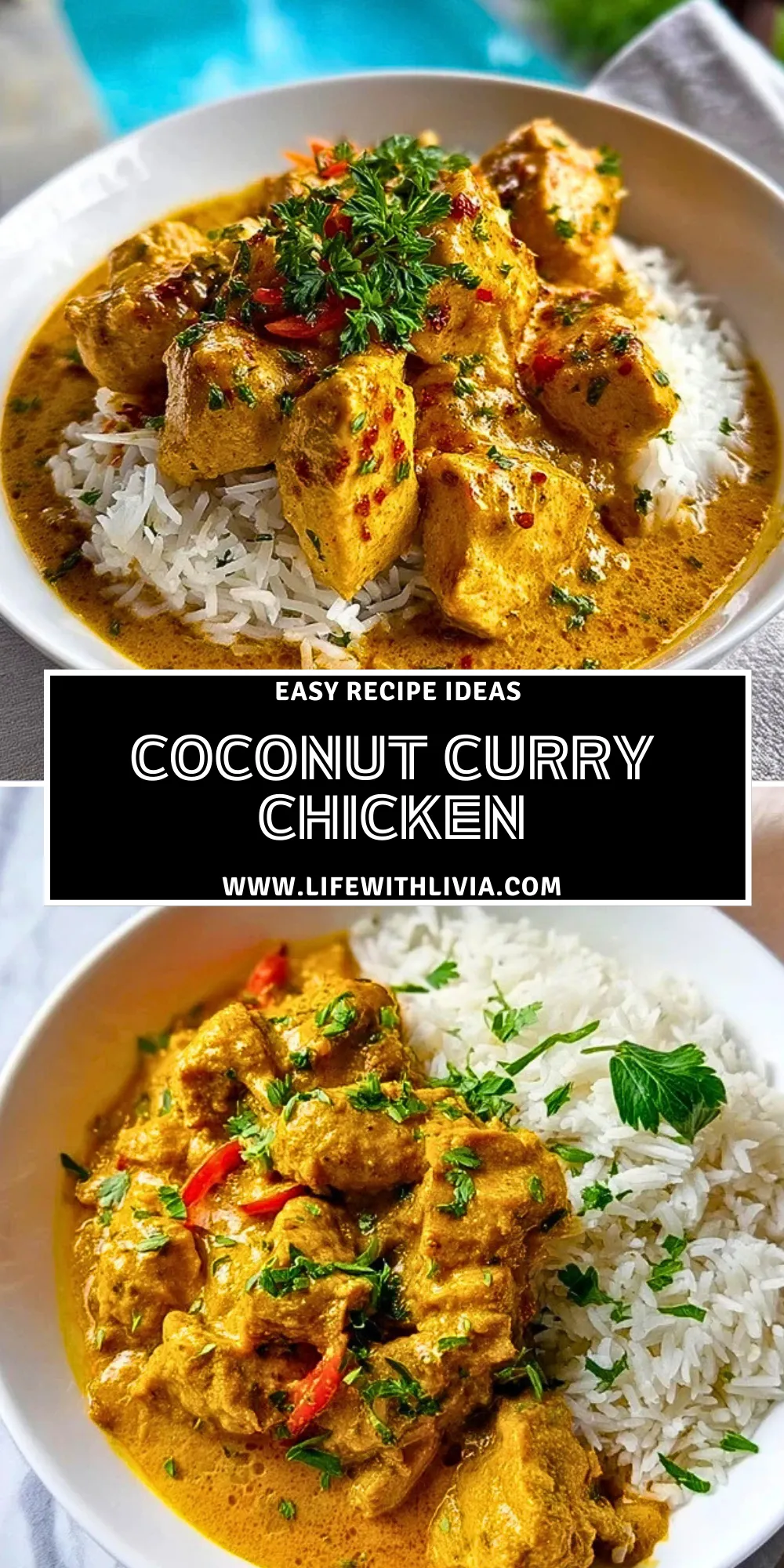
Creamy coconut sauce, tender bites of chicken, and a warm blend of spices make this Coconut Curry Chicken the kind of comfort food you crave on busy weeknights and cozy weekends alike. It’s rich and luxurious, but still light enough to enjoy any time of year.

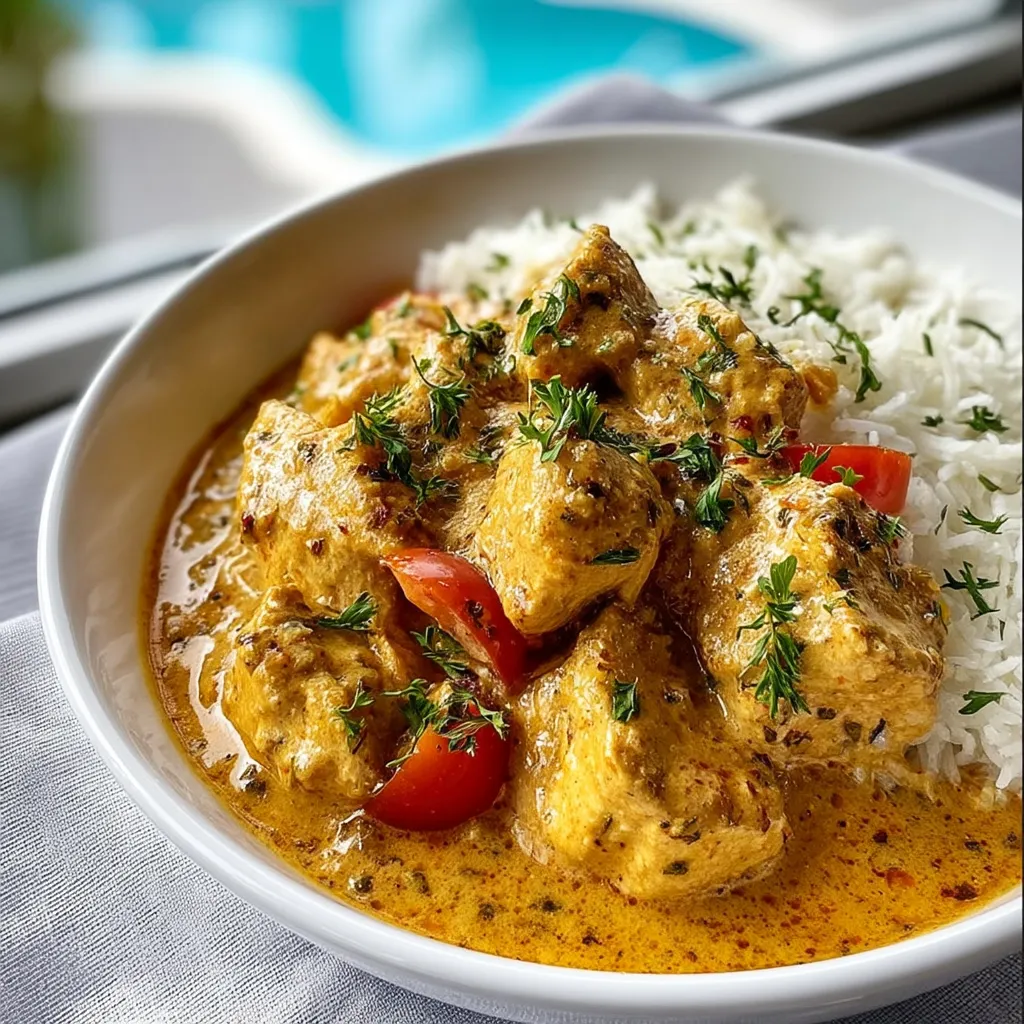
This dish comes together in one pan with simple pantry ingredients, yet it tastes like something from your favorite takeout spot. Spoon it over fluffy rice, mop up the sauce with warm naan, and you’ve got an easy dinner that feels special without a lot of fuss.
Why You’ll Love This Coconut Curry Chicken
Coconut Curry Chicken is a full-flavor meal that checks all the boxes: comforting, vibrant, and surprisingly simple.
- One-pan ease. Everything simmers in a single skillet, which means minimal cleanup and maximum flavor.
- Better-than-takeout flavor. Aromatic garlic, ginger, curry, and a touch of heat make this dish deeply satisfying.
- Customizable spice level. Keep it mild for the family, or turn up the heat with extra chili flakes or fresh chili.
- Creamy without being heavy. Coconut milk gives a silky texture without relying on heavy cream.
- Perfect for meal prep. The flavors only get better as it sits, so leftovers make an amazing lunch.
What Type of Coconut Milk Works Best for Coconut Curry Chicken?
For the creamiest, most luxurious sauce, full-fat canned coconut milk is your best friend. It creates a velvety texture that clings to the chicken and rice, giving each bite rich, comforting flavor.
Light coconut milk will still work if you want to keep things a bit lighter, but the sauce will be thinner and less silky. Avoid cartons of coconut milk meant for drinking—they’re usually watered down and often contain sweeteners or flavors that can throw off the balance of the curry.
If your coconut milk separates in the can, don’t worry. Simply whisk or stir it together in the pan as it heats, and it will smooth out into a luscious sauce.
Ingredients
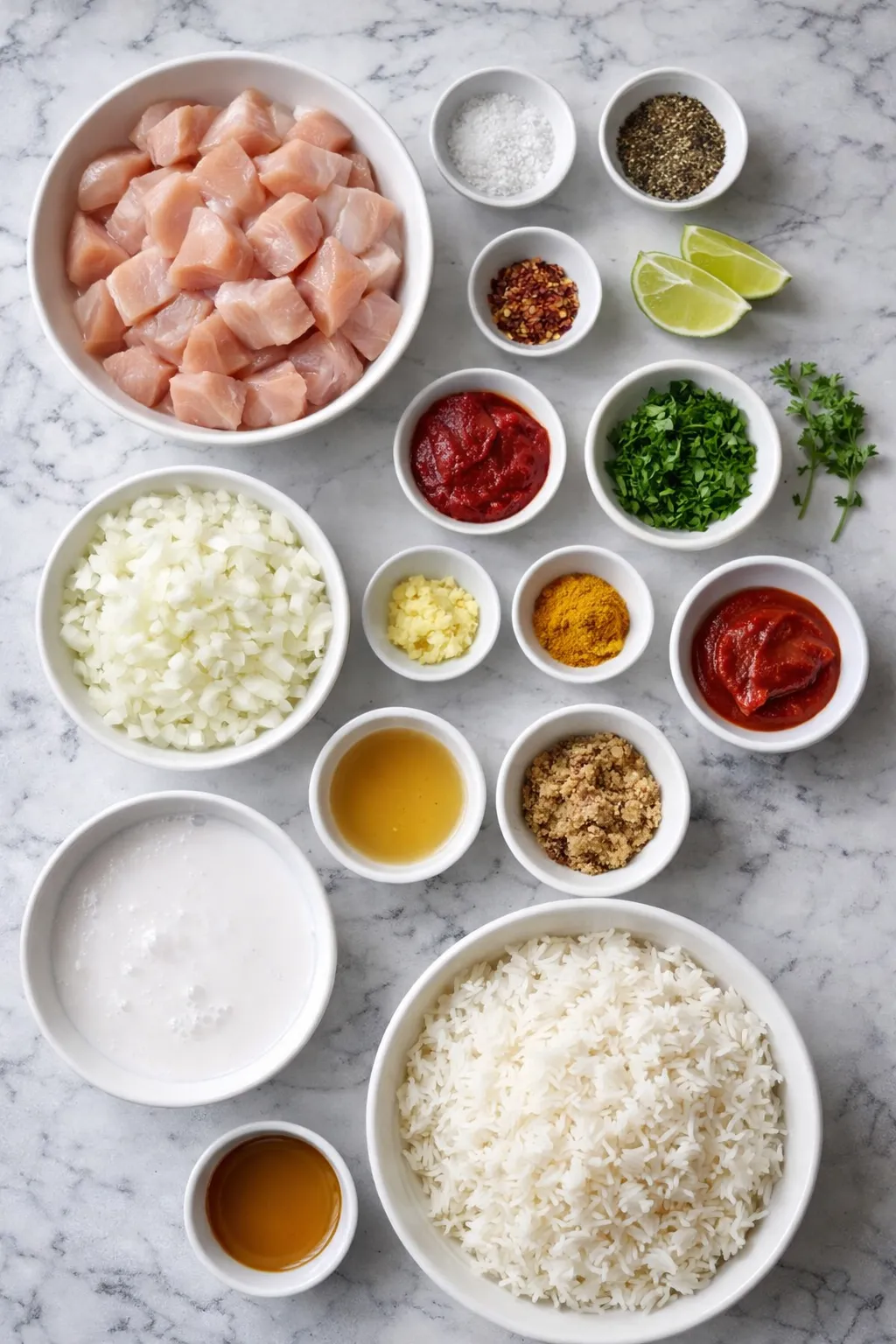
To build layers of flavor in Coconut Curry Chicken, we use a mix of fresh aromatics, warm spices, and creamy coconut milk. Here’s what each ingredient brings to the pan.
- Boneless skinless chicken breast or thighs – Lean, tender protein that soaks up all the curry flavors.
- Salt and black pepper – Seasons the chicken so every bite tastes balanced and savory.
- Olive oil or neutral cooking oil – Helps brown the chicken and bloom the spices.
- Onion – Adds sweetness and depth as it softens and caramelizes slightly.
- Garlic – Brings bold, savory aroma that’s essential in curry.
- Fresh ginger – Adds bright, zesty warmth and a subtle peppery kick.
- Red curry paste or curry powder – Provides the main curry flavor and beautiful golden color.
- Ground turmeric – Boosts color and adds earthy, warm notes.
- Crushed red pepper flakes or fresh chili – Adds gentle heat; adjust based on how spicy you like it.
- Tomato paste – Deepens the sauce with a hint of tang and richness.
- Canned full-fat coconut milk – Creates a creamy, velvety sauce with natural sweetness.
- Chicken broth or stock – Thins the sauce slightly and adds savory depth.
- Brown sugar or honey – Balances acidity and rounds out the spices with a touch of sweetness.
- Fresh lime juice – Brightens the sauce and wakes up all the flavors.
- Fresh cilantro or parsley – Adds freshness and color as a finishing touch.
- Cooked basmati or jasmine rice – The perfect fluffy base to soak up all that coconut curry sauce.
How To Make Coconut Curry Chicken
This Coconut Curry Chicken comes together with simple steps, but taking a moment to brown the chicken and bloom the spices makes a huge difference in flavor.
Step 1: Season and Sear the Chicken
Pat the chicken pieces dry and season them with salt and black pepper. Heat oil in a large skillet or sauté pan over medium-high heat. Add the chicken in a single layer and sear until lightly golden on the outside. The chicken doesn’t need to be fully cooked yet—just nicely browned for flavor. Transfer the chicken to a plate and set aside.
Step 2: Sauté the Aromatics
In the same pan, add a little more oil if the skillet looks dry. Reduce the heat to medium and add the chopped onion. Cook until softened and translucent, scraping up any browned bits from the bottom of the pan. Stir in the garlic and ginger and cook briefly until fragrant, being careful not to burn them.
Step 3: Bloom the Spices
Add the curry paste or curry powder, turmeric, and crushed red pepper flakes to the pan. Stir constantly for a minute or two so the spices warm through and become aromatic. This step helps release their oils and gives the curry a deeper, more complex flavor.
Step 4: Build the Coconut Curry Sauce
Stir in the tomato paste and let it cook briefly with the spices. Pour in the coconut milk and chicken broth, whisking or stirring well to combine everything into a smooth sauce. Add a small amount of brown sugar or honey to balance the spice and acidity, then bring the mixture to a gentle simmer.
Step 5: Simmer the Chicken
Return the seared chicken and any accumulated juices to the pan. Reduce the heat to low and let the curry simmer until the chicken is cooked through and the sauce has thickened slightly. Stir occasionally so nothing sticks to the bottom.
Step 6: Finish and Serve
Once the chicken is tender and the sauce is rich and creamy, stir in a squeeze of fresh lime juice. Taste and adjust the seasoning with additional salt, pepper, or lime as needed. Sprinkle chopped cilantro or parsley over the top.
Serve the Coconut Curry Chicken over warm basmati or jasmine rice, spooning plenty of sauce over each portion. Garnish with extra herbs and sliced chili if you like more heat.
How to Serve Coconut Curry Chicken for the Best Meal
Coconut Curry Chicken is a complete and satisfying meal, especially when you serve it over a generous bed of fluffy rice. As written, this dish comfortably feeds about four people, making it ideal for a family dinner or a cozy meal with leftovers for the next day.
Spoon the curry over steamed basmati or jasmine rice so the grains soak up every drop of that coconut sauce. Add a side of warm naan or flatbread for dipping, and a simple cucumber salad or steamed vegetables to keep things light and fresh. If you prefer low-carb options, try serving it over cauliflower rice or sautéed greens instead.
For a dinner party, garnish each bowl with extra herbs, lime wedges, and thinly sliced chili so everyone can customize their own bowl.
How to Store and Reheat Coconut Curry Chicken
Leftover Coconut Curry Chicken stores beautifully, which makes it perfect for meal prep or next-day lunches.
- Refrigerator: Allow the curry to cool to room temperature, then transfer it to an airtight container. Store in the fridge for up to three to four days.
- Freezer: For longer storage, portion the cooled curry into freezer-safe containers, leaving a little space at the top for expansion. Freeze for up to three months. Thaw overnight in the refrigerator before reheating.
- Reheating on the stove: Warm the curry gently in a saucepan over low to medium heat, stirring occasionally. Add a splash of water or broth if the sauce has thickened too much.
- Reheating in the microwave: Place individual portions in a microwave-safe dish, cover loosely, and heat in short intervals, stirring in between until heated through.
Avoid boiling the curry vigorously when reheating, as this can cause the coconut milk to separate and change the texture. If you’ve served the curry over rice, store leftover rice separately when possible to keep it from getting too soft.
Frequently Asked Questions
Can I use chicken thighs instead of chicken breasts?
Absolutely. Boneless, skinless chicken thighs work wonderfully in Coconut Curry Chicken. They stay juicy and tender, even after simmering in the sauce, and their slightly higher fat content adds extra richness.
Is Coconut Curry Chicken very spicy?
The heat level is entirely up to you. Using mild curry paste or curry powder with just a pinch of red pepper flakes will keep the dish gentle enough for most families. If you like things spicier, add more chili flakes, stir in a spoonful of chili paste, or garnish with sliced fresh chili.
Can I make Coconut Curry Chicken dairy-free or gluten-free?
This dish is naturally dairy-free thanks to the coconut milk. To keep it gluten-free, simply make sure your curry paste, broth, and any sides (like naan) are certified gluten-free. Serving it over rice or cauliflower rice keeps everything safely gluten-free.
What vegetables can I add to Coconut Curry Chicken?
You can easily bulk up this dish with vegetables. Try adding bell peppers, peas, baby spinach, carrots, green beans, or broccoli florets. Stir firmer vegetables into the sauce when you return the chicken to the pan, and add quick-cooking veggies like spinach near the end so they stay vibrant.
Can I make Coconut Curry Chicken ahead of time?
Yes. Coconut Curry Chicken actually tastes even better after the flavors have had time to meld. Make it up to a day in advance, cool completely, then refrigerate and reheat gently on the stove before serving. You may want to add a splash of broth or coconut milk to loosen the sauce if it thickens.
Want More Chicken Dinner Ideas?
If Coconut Curry Chicken is your kind of cozy bowl, you’ll love these other flavorful chicken dinners from Life With Livia:
- Try this sticky-sweet and savory honey sesame chicken for a quick weeknight stir-fry.
- Keep things light yet comforting with juicy chicken and zucchini, perfect for using up summer produce.
- Cozy up with a bowl of Moroccan chicken stew packed with warm spices and tender vegetables.
- For a classic meat-and-potatoes moment, serve garlic herb chicken with mashed potatoes and glazed carrots on your next Sunday dinner.
Save This Pin For Later
📌 Save this Coconut Curry Chicken to your Pinterest dinner board so you can come back to it any time.
Make it exactly as written the first time, then tweak the spice level, vegetables, or garnishes to make it your own. I’d love to hear how you serve it—do you pile it over rice, scoop it up with naan, or go lighter with cauliflower rice?
You can always find more delicious food ideas and daily cooking inspiration on Life With Livia.
Print Coconut Curry Chicken
- Total Time: 40
- Yield: 4 servings
Description
Creamy Coconut Curry Chicken is an easy dinner that tastes like takeout but comes together in one pan, perfect for quick breakfast leftovers, weeknight dinner ideas, or a cozy healthy snack-style bowl when you want simple food ideas and an easy recipe that still feels special.
Ingredients
1 ½ pounds boneless skinless chicken breasts cut into bite-size pieces
1 teaspoon salt divided
½ teaspoon black pepper
2 tablespoons olive oil divided
1 medium onion finely chopped
3 cloves garlic minced
1 tablespoon fresh ginger grated
2 tablespoons red curry paste or mild curry powder
½ teaspoon ground turmeric
¼ teaspoon crushed red pepper flakes more to taste
1 tablespoon tomato paste
1 can full-fat coconut milk 13.5 ounces
½ cup chicken broth
1 tablespoon brown sugar or honey
1 tablespoon fresh lime juice plus extra for serving
2 tablespoons fresh cilantro or parsley chopped plus more for garnish
4 cups cooked basmati or jasmine rice for serving
Instructions
1. Season chicken pieces with half of the salt and the black pepper.
2. Heat half of the olive oil in a large skillet over medium-high heat. Add chicken in a single layer and sear until lightly browned on all sides but not fully cooked. Transfer to a plate.
3. Reduce heat to medium and add remaining olive oil to the skillet. Stir in the chopped onion and cook until softened and translucent, scraping up browned bits from the bottom.
4. Add minced garlic and grated ginger and cook until fragrant, about 30 seconds.
5. Stir in red curry paste or curry powder, ground turmeric, and crushed red pepper flakes. Cook, stirring constantly, for 1 minute to bloom the spices.
6. Add tomato paste and cook another 30 seconds, stirring to coat the onions and spices.
7. Pour in the coconut milk and chicken broth, whisking until the sauce is smooth and well combined.
8. Stir in brown sugar or honey and remaining salt, then bring the mixture to a gentle simmer.
9. Return the seared chicken and any accumulated juices to the skillet, stirring to coat the pieces in the sauce.
10. Reduce heat to low and simmer for 10 to 12 minutes, or until the chicken is cooked through and the sauce has thickened slightly.
11. Stir in fresh lime juice and chopped cilantro or parsley. Taste and adjust seasoning with additional salt, pepper, lime juice, or chili flakes as desired.
12. Serve Coconut Curry Chicken over warm cooked basmati or jasmine rice, garnishing with extra herbs and lime wedges if you like.
Notes
For the best texture, avoid boiling the sauce aggressively after adding the coconut milk—keep the curry at a gentle simmer so the coconut milk stays silky and does not separate.
- Prep Time: 15
- Cook Time: 25
- Category: Dinner
- Method: Stovetop
- Cuisine: Asian-inspired
Nutrition
- Serving Size: 1 serving
- Calories: 520
- Sugar: 5
- Sodium: 720
- Fat: 26
- Saturated Fat: 14
- Unsaturated Fat: 10
- Trans Fat: 0
- Carbohydrates: 34
- Fiber: 1
- Protein: 37
- Cholesterol: 130
Keywords: coconut curry chicken, easy dinner, curry, chicken curry, weeknight dinner, one pan meal, rice bowl