
 Livia Scott

Few things feel more rewarding than pulling a golden loaf of homemade bread from the oven, especially when it took almost no hands-on effort to get there. This No Knead Rosemary Garlic Bread has a crackly crust, a soft and airy center, and the kind of savory aroma that makes the whole kitchen feel warm and inviting.
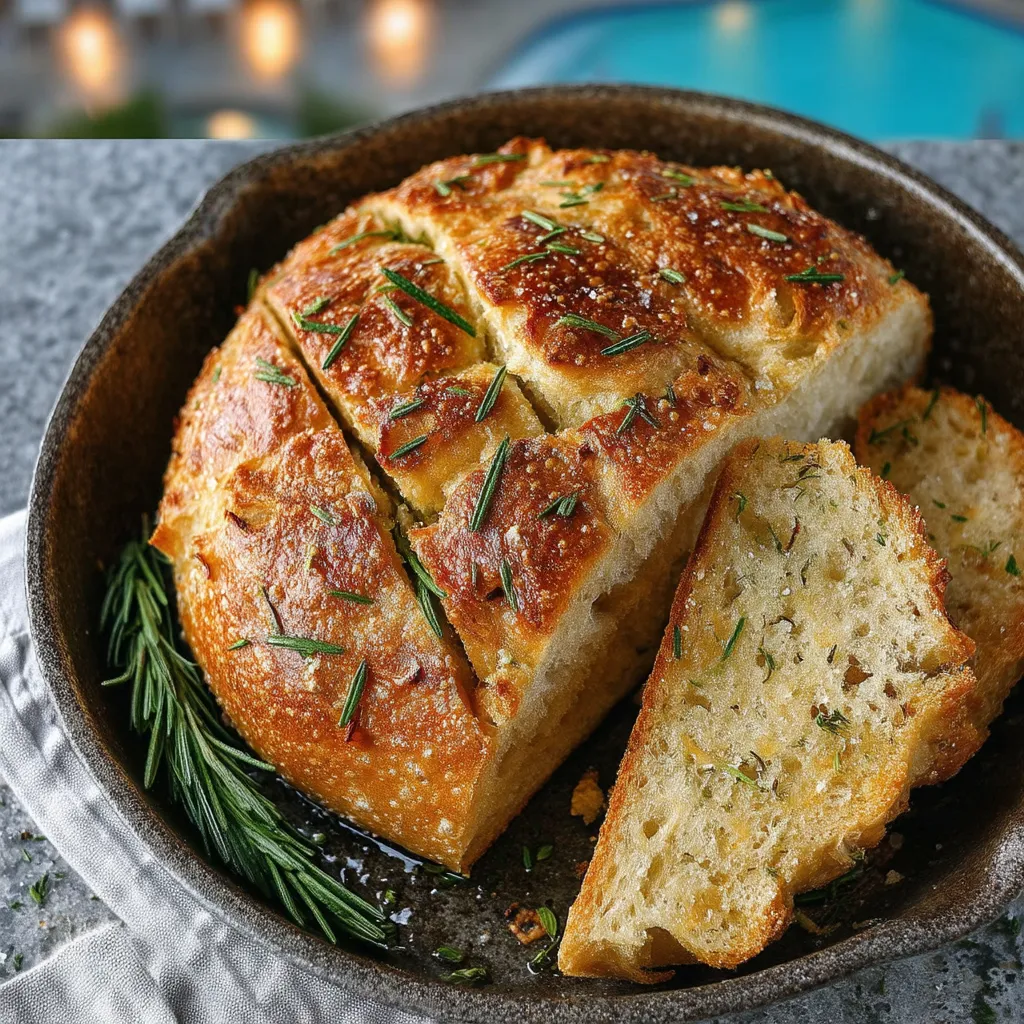
Fresh rosemary and garlic give this rustic loaf a deep homemade flavor that pairs beautifully with soups, pasta, roasted meats, or a simple swipe of butter. It is the kind of bread that looks impressive on the table but is wonderfully approachable for beginners.
Why You’ll Love This No Knead Rosemary Garlic Bread
This bread is perfect for busy days because the dough comes together with minimal work. There is no complicated kneading, no stand mixer, and no need for advanced bread-making skills. Time does most of the heavy lifting.
You will also love how versatile it is. Serve it as a side for dinner, slice it for sandwiches, or toast leftovers for an easy snack. The rosemary and garlic bring bold flavor without overpowering the classic comfort of homemade bread.
What Makes No Knead Rosemary Garlic Bread So Good?
The secret is the long rise. It gives the dough time to develop flavor and structure naturally, which creates that chewy interior and crisp crust people love in artisan-style bread.
Using rosemary and garlic in the dough adds savory depth in every bite. A hot baking vessel helps trap steam, which encourages the loaf to rise well and bake up with a beautifully bronzed exterior.
Ingredients
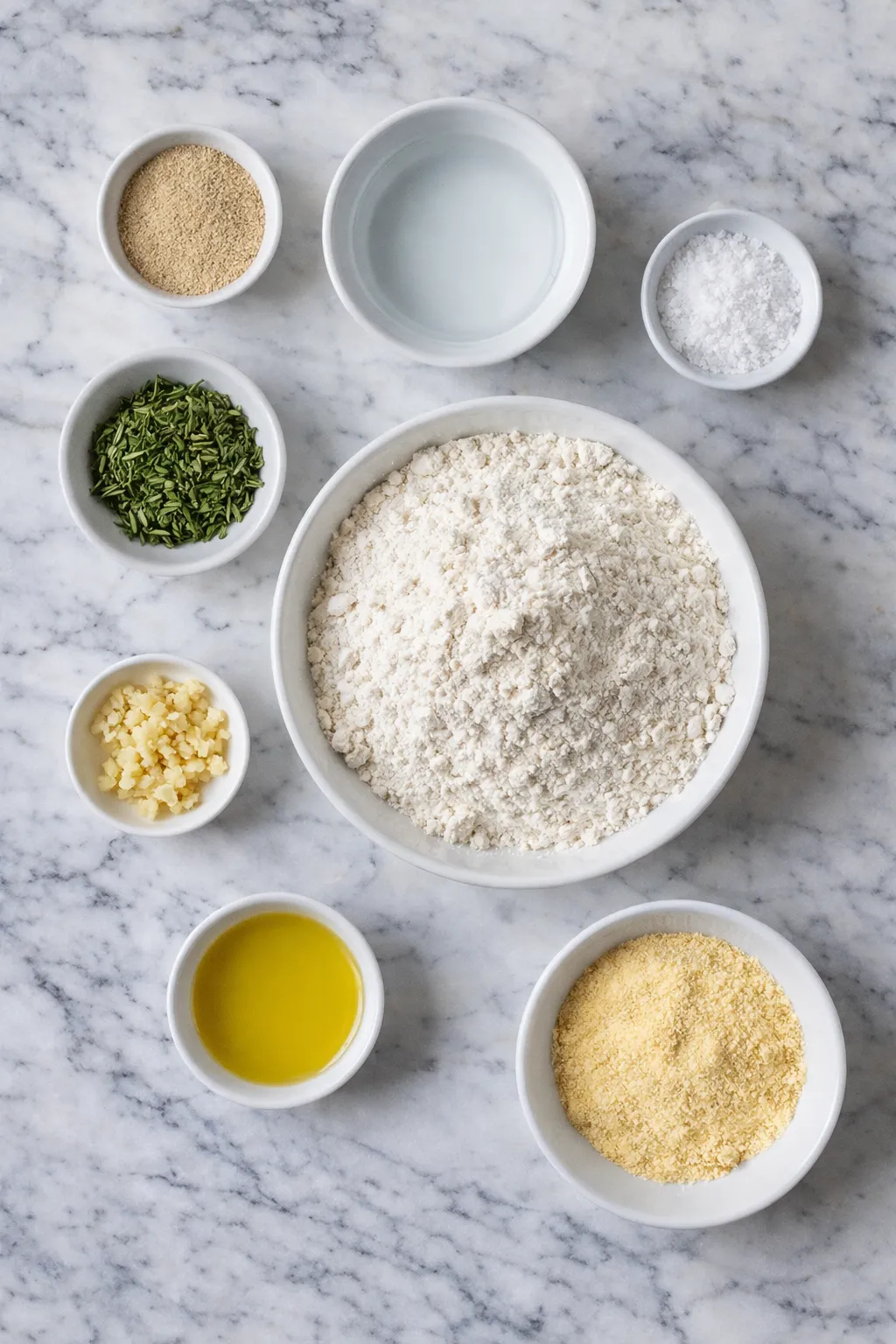
Before you start mixing, it helps to know why each ingredient matters. This loaf uses a short list of pantry basics, but every one of them plays an important role in the final texture and flavor.
- All-purpose flour — forms the base of the dough and gives the bread its structure while keeping the crumb tender.
- Warm water — hydrates the flour and helps create the soft, sticky dough needed for a no-knead loaf.
- Instant yeast — helps the dough rise slowly and develop its airy texture.
- Salt — sharpens the overall flavor and strengthens the dough.
- Fresh rosemary — adds fragrant herbal flavor that makes the loaf taste rustic and savory.
- Garlic — brings bold depth and warmth that pairs naturally with rosemary.
- Olive oil — adds a little richness and helps round out the flavor.
- Cornmeal or flour for dusting — helps prevent sticking while shaping and transferring the dough.
How To Make the No Knead Rosemary Garlic Bread
A little patience is the key here. The steps are simple, and most of the time is hands-off while the dough rises and the oven does the rest.
Step 1: Mix the Dough
In a large bowl, stir together the flour, yeast, salt, rosemary, and garlic. Pour in the warm water and olive oil, then mix until a shaggy, sticky dough forms. There is no need to knead it smooth. Just make sure there are no dry patches of flour left behind.
Step 2: Let the Dough Rise
Cover the bowl tightly and leave the dough at room temperature until it becomes puffy, bubbly, and more than doubles in size. This slow rise builds flavor and gives the bread its airy interior.
Step 3: Shape the Loaf
Turn the dough onto a well-floured surface. With lightly floured hands, gently fold it over itself a few times to bring it together into a rough round shape. Avoid pressing out too much air.
Step 4: Rest While the Oven Heats
Place the shaped dough on parchment or a well-dusted surface, cover loosely, and let it rest while the oven preheats. At the same time, heat your Dutch oven or oven-safe pot so it is thoroughly hot before baking.
Step 5: Bake Until Deep Golden
Carefully transfer the dough into the hot pot, cover it, and bake until the loaf has risen and set. Remove the lid for the final part of baking so the crust can turn beautifully crisp and golden brown.
Step 6: Cool Before Slicing
Move the bread to a wire rack and let it cool before cutting. This helps the crumb finish setting so you get clean slices instead of a gummy center.
The Best Ways to Serve No Knead Rosemary Garlic Bread
This loaf serves about 8 people as a side dish, though it can stretch a little further if you are serving it alongside a full meal. It is especially good warm with butter, olive oil, or a sprinkle of flaky salt.
Pair it with creamy soups, pasta dinners, stew, roasted chicken, or a simple salad. It also makes an excellent appetizer bread for gatherings when sliced and served with whipped butter, herb oil, or soft cheese.
How to Store No Knead Rosemary Garlic Bread
Once the bread has cooled completely, store it at room temperature wrapped in a clean kitchen towel or in a paper bag for the best crust texture. It will usually stay at its best for up to 2 days this way.
For a slightly softer crust, keep it in an airtight container, though this can take away some of that fresh-baked crispness. Avoid refrigerating the loaf because bread tends to dry out faster in the fridge.
To freeze it, wrap the loaf or individual slices tightly and place them in a freezer-safe bag. When you are ready to enjoy it again, thaw at room temperature and warm in the oven for a few minutes to refresh the crust.
Frequently Asked Questions
1. Can I use dried rosemary instead of fresh?
Yes, dried rosemary works well if that is what you have on hand. Since it is more concentrated than fresh rosemary, a smaller amount is usually enough. Crushing it lightly before adding it to the dough helps release more flavor.
2. Do I need a Dutch oven for this bread?
A Dutch oven gives the best crust because it traps steam, but it is not the only option. Any heavy oven-safe pot with a lid can work, as long as it can handle high heat safely.
3. Why is my dough so sticky?
No-knead dough is supposed to be sticky. That loose texture is what helps create the open, airy crumb. Resist the urge to add too much extra flour, or the bread may turn out dense.
4. Can I add cheese to the dough?
Yes, a little shredded Parmesan or Asiago can be a delicious addition. Fold it in gently during the mixing stage so it spreads through the dough without weighing it down too much.
5. How do I know when the bread is done baking?
The loaf should be deeply golden and sound hollow when tapped. If you want extra assurance, the center should read around 200 to 210 degrees Fahrenheit with an instant-read thermometer.
Want More Bread Ideas?
If this loaf made your kitchen smell amazing, these cozy recipes are worth a spot on your baking list too:
- Rustic Garlic Rosemary Skillet Bread for another herb-packed loaf with rustic charm.
- Olive Bread if you love savory breads with bold Mediterranean flavor.
- Homemade Dinner Rolls when you want something soft, fluffy, and perfect for family meals.
- German Christmas Stollen Traditional Holiday Bread for a festive bread option with a rich old-world feel.
Save This Pin For Later
📌 Save this recipe to your Pinterest bread board so you can come back to it any time.
And let me know in the comments how yours turned out. Did you keep it classic with rosemary and garlic, or did you add cheese, extra herbs, or a little flaky salt on top?
I love hearing how others make these recipes their own. Questions are welcome too, and you can find more daily recipe inspiration on Life With Livia.
Print No Knead Rosemary Garlic Bread
- Total Time: 13 hours
- Yield: 8 servings
- Diet: Vegetarian
Description
No Knead Rosemary Garlic Bread is a rustic, easy recipe with a crisp golden crust, soft airy center, and savory flavor from fresh rosemary and garlic. It is perfect for a quick breakfast side, easy dinner addition, healthy snack board, cozy soup pairing, and one of those homemade bread food ideas that feels special without much work.
Ingredients
3 cups all-purpose flour
1 1/2 cups warm water
2 teaspoons instant yeast
1 1/2 teaspoons salt
1 tablespoon fresh rosemary, chopped
3 cloves garlic, minced
1 tablespoon olive oil
2 tablespoons cornmeal or extra flour for dusting
Instructions
1. In a large bowl, mix the flour, instant yeast, salt, chopped rosemary, and minced garlic.
2. Pour in the warm water and olive oil, then stir until a shaggy sticky dough forms with no dry flour left.
3. Cover the bowl and let the dough rise at room temperature for 12 to 18 hours until bubbly and doubled in size.
4. Turn the dough onto a floured surface and gently shape it into a round loaf without kneading heavily.
5. Let the shaped dough rest while the oven and Dutch oven preheat to 450°F.
6. Carefully place the dough into the hot pot, cover, and bake for 30 minutes.
7. Remove the lid and bake for 10 to 15 minutes more until the crust is deep golden brown.
8. Transfer the bread to a wire rack and cool before slicing.
Notes
Do not add too much extra flour while shaping the dough, or the bread can turn dense instead of light and airy.
- Prep Time: 15 minutes
- Cook Time: 45 minutes
- Category: Bread
- Method: Baking
- Cuisine: American
Nutrition
- Serving Size: 1 slice
- Calories: 185
- Sugar: 0.5 g
- Sodium: 360 mg
- Fat: 2.5 g
- Saturated Fat: 0.4 g
- Unsaturated Fat: 1.8 g
- Trans Fat: 0 g
- Carbohydrates: 35 g
- Fiber: 1.5 g
- Protein: 5 g
- Cholesterol: 0 mg
Keywords: no knead rosemary garlic bread, easy bread recipe, homemade artisan bread, quick breakfast side, easy dinner bread, rustic bread recipe, garlic rosemary loaf, food ideas